


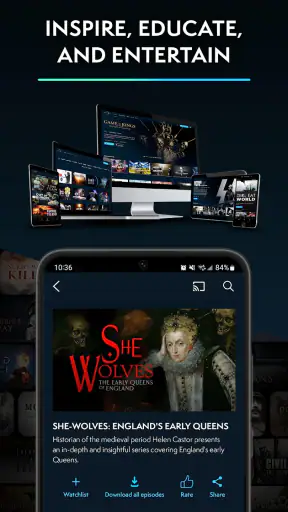
I approached MagellanTV Documentaries as an education app rather than something to leave playing in the background. That distinction matters. Its appeal is the chance to turn a spare half hour into a focused look at history, science, true crime, or paranormal subjects, all within one documentary-oriented service. After spending time with it, my view is positive but selective: it is a useful choice for curious viewers who want a dedicated place for factual programming, while people expecting the enormous variety or highly polished discovery tools of the biggest general streaming services may find it narrower.
The app is free to install, and the Android listing shows more than a million installs. It comes from MagellanTV Documentaries, a developer whose identity is closely tied to this documentary focus rather than a broad entertainment catalog. That specialization is its clearest strength. Instead of making documentaries one small section among films, series, and short videos, the app puts factual viewing at the center.
What the viewing experience does best
A focused alternative to general streaming apps
My first useful impression was that the subject matter gives the app a clearer purpose than a typical streaming service. When I open a general entertainment platform, I often spend longer browsing than watching. MagellanTV is easier to approach when I already know the mood I want: an account of a historical period, an explanation of a scientific subject, an investigation, or something deliberately unsettling.
That focus makes it particularly practical for short, intentional viewing sessions. I can choose a topic before dinner, watch part of a program, and feel that the time was spent learning something rather than simply filling silence. It also suits viewers who enjoy documentaries but do not want to search through unrelated entertainment categories first.
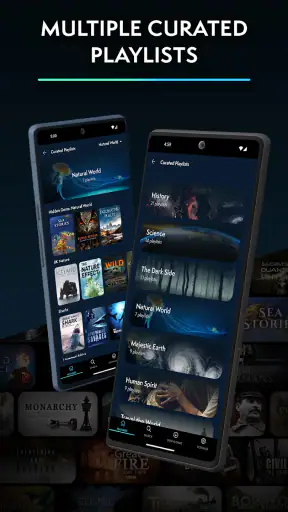
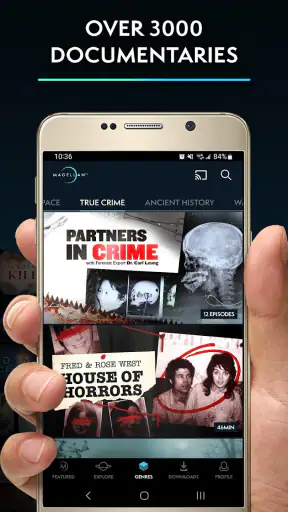
The range of subjects is broad enough to prevent the service from feeling locked into one niche. History can attract viewers interested in people and events, science works for those who prefer explanations and discoveries, while true crime and paranormal programs offer a more dramatic route into factual storytelling. Those categories do not appeal equally to everyone, so the app works best when I treat it as a collection of different moods rather than one consistent style.
Why the education angle feels practical
I would not use this app as a replacement for a textbook, a university course, or a carefully structured reference source. Its value is different. It makes learning approachable when I have limited time and want a visual narrative. A documentary can provide context, images, interviews, and a sense of sequence in a way that a quick article often does not.
For a student, the app can be a starting point before deeper research. I might watch a program to understand the basic shape of a historical subject, then use books or reputable academic sources to check details and explore competing interpretations. That workflow is important because documentary storytelling can simplify complicated issues for clarity. The app is strongest as an entry point and source of curiosity, not as the only authority for serious research.
It can also work well in a household with different interests. One person may choose a science program, while another prefers history or crime. The content rating is Everyone 10+, which makes the service more approachable for families than many adult-focused streaming options, although I would still preview sensitive subjects before handing a device to a younger viewer. The age label should not be treated as a promise that every topic will suit every child.
Small habits that make browsing more rewarding
One of the better ways to use the app is to begin with a question rather than a category. Instead of opening it and asking what looks attractive, I might decide, “I want to understand how this event unfolded,” or “I want a science topic I can explain to someone else afterward.” That simple change reduces aimless browsing and helps me judge whether a documentary is actually serving my interest.
I also recommend treating a long program as a sequence of sessions. Watching a difficult historical subject in one sitting can make names and dates blur together. Splitting it into manageable portions gives me time to pause, take a note, or look up a term separately. This is a more effective learning routine than letting several unrelated documentaries run one after another.
A third useful approach is to pair viewing with a short personal summary. After finishing a program, I write down the central claim, the strongest evidence presented, and one question that remains. That habit exposes whether I really understood the documentary or merely enjoyed its presentation. It is especially helpful with true crime and paranormal material, where atmosphere can be memorable even when the underlying evidence deserves careful scrutiny.
Where the catalog’s variety creates a trade-off
The subject range is a strength, but it also means the experience may feel uneven from one program to another. History, science, true crime, and paranormal documentaries have different standards of evidence, pacing, and tone. A viewer who wants every title to feel like a formal educational lecture may be disappointed by programs built more around mystery or dramatic storytelling.
I see that as a trade-off rather than a flaw in the entire service. The broader selection makes the app more inviting for casual viewers, but it asks me to choose thoughtfully. When I want dependable background knowledge, I favor a carefully sourced history or science program. When I want an evening of investigation and atmosphere, a true crime or paranormal title may be a better fit, provided I keep the difference between entertainment and proof in mind.
The main weakness: it is not ideal for every kind of viewer
The biggest limitation is the possibility of mismatched expectations. Someone looking for a general streaming replacement may find the documentary-only identity restrictive. There is no reason to download a specialist service if my main goal is fictional series, live entertainment, children’s cartoons, or a very broad mix of video. MagellanTV’s purpose is more specific, and that specificity becomes a weakness when it does not match the viewer’s routine.
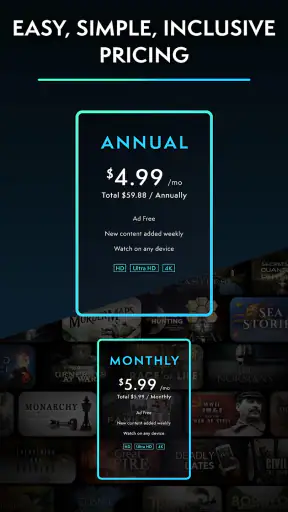
The free entry point is helpful, but in-app purchases range from $5.99 to $59.99 per item. That means I would examine the available access options carefully before committing money. A free installation does not automatically mean the whole experience will suit someone who wants unlimited viewing without additional spending. I would first test whether the selection and presentation fit my habits, then decide whether the paid path offers enough value for the way I watch.
Another point worth considering is the rating history. The app has a 3.8 average from around 3.7 thousand ratings, alongside roughly 732 written reviews. That is a respectable sign of interest, but not an overwhelming endorsement. I read that as a reason to keep expectations measured: many viewers clearly find value here, while the experience is not universally perfect. The rating feels consistent with a specialized service that will satisfy its target audience more strongly than everyone else.
How it compares with familiar alternatives
Compared with free video platforms, this app offers a more deliberate documentary identity. Free platforms may provide a larger flood of individual clips and programs, but finding a coherent viewing path can take patience. MagellanTV is preferable when I want the app itself to stay centered on documentary subjects rather than mix factual videos with unrelated uploads.
Compared with major subscription services, the decision is less straightforward. Large platforms usually win on overall scale, recognizable productions, and variety across entertainment. MagellanTV wins when I want documentary browsing without navigating a huge general catalog. If I watch factual programs several times a week, that focus can feel more valuable than a larger service where documentaries are only one small option.
Compared with books and specialist educational websites, the app is faster and more visual, but usually less systematic. I can gain an accessible overview while commuting or relaxing, yet I should not expect the same depth, citations, or structured progression that a serious course provides. For me, the best arrangement is complementary: use the app to discover subjects, then move to more detailed sources when accuracy or depth matters.
A realistic everyday use case
Imagine finishing work with forty minutes before an appointment. I want something more substantial than short social videos, but I do not have the energy for a long course. I open the app, choose a subject from history or science, and watch with a notebook nearby. If the program raises a question, I record it instead of interrupting the whole session with a deep search. Later, I can return to that question and decide whether the topic deserves a book or a longer study session.
That scenario captures the app’s practical value. It turns an awkward gap in the day into a small learning opportunity without demanding a formal schedule. It also shows why I would not recommend it to someone who dislikes documentary narration or prefers interactive learning. Watching is convenient, but it remains a mostly passive activity unless I add my own notes, discussion, or follow-up research.
Who should install it, and who should skip it
I would recommend MagellanTV to viewers who regularly choose factual programs, enjoy moving between several subject areas, and want a dedicated documentary destination. It is especially suitable for curious adults, families who preview topics sensibly, and learners who need an accessible introduction before studying a subject in greater depth.
I would be more cautious about recommending it to someone who wants a single app for every kind of entertainment. I would also suggest another option for viewers seeking formal lessons, interactive quizzes, academic references, or a tightly sequenced curriculum. The app can support learning, but it does not replace a teacher or a structured course simply because its content is educational in theme.
Device compatibility is another practical consideration. The Android version requires OS 8.1 or later, so I would check the phone or tablet before planning around it. The app was released on January 18, 2019, and its continued presence, together with its install base, suggests that it has found a lasting audience. Still, compatibility and the payment model are worth checking first, particularly on an older device.
My final recommendation
After using it as a documentary viewer, I see MagellanTV Documentaries as a focused education app with genuine everyday usefulness. Its strongest argument is not that it can replace every other video service, but that it gives documentary fans a clearer route to history, science, true crime, paranormal subjects, and related programming. I like that I can open it with a learning intention and usually stay within that world.
The limitations are equally clear. The catalog’s different tones may not suit viewers who want a uniform academic standard, the specialist focus is too narrow for general entertainment, and the in-app purchase range means I would test the free experience before spending. Those are meaningful considerations, not minor footnotes.
My verdict is that this is best treated as a documentary companion, not an all-purpose streaming replacement. If you enjoy factual storytelling and are willing to separate engaging presentation from deeper research, I think it is worth trying. If you need interactive education, exhaustive scholarly detail, or a huge general catalog, another service will serve you better. For the right viewer, though, it offers an easy way to make an ordinary evening more curious and more informed.


